Tummy Tuck Surgery in Chicago, IL
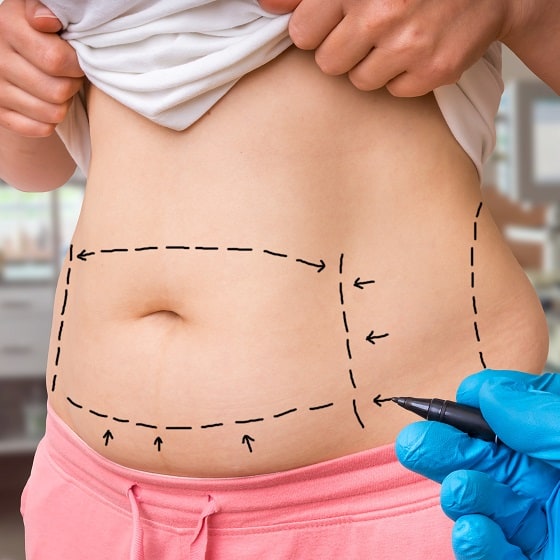
Many men and women struggle to tone their abdominal areas with exercise and diet, only to find that tummy tuck is the best solution. Tummy tuck, or abdominoplasty, removes excess fat and skin from the midsection and tightens the abdominal muscles for a flatter, firmer tummy.
Candidates for Tummy Tuck
You may be a candidate for tummy tuck if you are in good health, at a stable weight and have realistic expectations of surgery. If you plan to get pregnant or fluctuate in weight, tummy tuck is not recommended. Also, if you have only excess fat in your midsection but no excess skin, liposuction may be a more suitable solution.
Preparing for Surgery
The first step toward preparing for surgery is to schedule a surgical consultation with our team. During the consultation, our surgeons will determine whether you are a suitable candidate for tummy tuck based on a medical evaluation, review of your medical history and discussion of your personal goals. They will also explain the procedure in detail, covering your options, what to expect on the day of surgery, the costs and potential risks of the procedure. Once you have scheduled your plastic surgery, you will receive further instructions on how to prepare.
These instructions may include: stop smoking for a certain amount of time prior to your surgery; avoid taking particular medications like aspirin or anti-inflammatory drugs, which can increase the chance of bleeding; and have some testing done at a lab.
The Day of Surgery
Tummy tuck is an outpatient procedure that takes several hours. An anesthesiologist will first administer medication to help you sleep comfortably as our surgeon works. Our plastic surgeon starts by making a horizontal incision right above the pubic hairline. The length of this incision depends on the amount of skin that you need to have removed. A second incision may be needed around the belly button. Through the incision, the surgeon will tighten the weakened abdominal muscles, stitching them into place. The belly button may be repositioned. Excess fat and skin are then removed and the remaining skin is stretched tightly and sutured together.
After recovering at our surgical facility for a few hours, you will be released into the care of a loved one, who should accompany you home to rest.
Recovering from Surgery
After tummy tuck surgery, you will need to rest at home for a period of time before returning to work, exercise and your normal routine. You will be sore and swollen, but this will go away over time. Your bandages and surgical dressings will need to remain in place until one of our surgeons removes them during a follow-up appointment. Typically, full tummy tuck recovery takes several weeks, but you will be able to return to work sooner (as long as your work responsibilities do not involve vigorous movement).
Potential Risks of Tummy Tuck
Your tummy tuck risk decreases when under the care of an experienced plastic surgeon. However, any surgery carries a slight degree of risk. Tummy tuck risks include:
- Hematoma (pooling of blood below the skin)
- Infection
- Scarring
- Change in skin sensation / numbness
- Anesthesia-related complications
- Nerve damage
- Blood clots

Other Considerations
You should not undergo tummy tuck surgery if you think you may become pregnant in the future; pregnancy can reverse the effects of tummy tuck.
The type of tummy tuck that you have depends on the current condition of your abdomen. Candidates with only a little bit of excess skin and fat underneath the belly button can opt for a “mini” tummy tuck with liposuction. Candidates with large amounts of excess skin may need to explore a different procedure called a panniculectomy.
Frequently Asked Questions
At Northwestern Plastic Surgery, our tummy tuck patients often have a lot of questions about their procedure, including what to expect. We have compiled a list of the most frequently asked questions and answers below.
How much does tummy tuck cost?
Your tummy tuck cost will vary based on several factors, including the specific approach our surgeons take and whether another procedure is being incorporated into the surgery. Because it is an elective surgery, insurance does not cover the cost of tummy tuck.
Your tummy tuck cost will likely include the surgeon’s fees, anesthesia medications and facility fees. It may not, however, include pre-operative medical testing, prescription medications, support garments and other post-operative supplies.
We would be happy to discuss tummy tuck pricing in more detail with you during an informative surgical consultation. Please call us to schedule an appointment.
Will tummy tuck repair my abdominal muscles?
Yes, tummy tuck will repair abdominal muscles that have severely weakened or separated due to pregnancy or significant weight fluctuation. During the procedure, our surgeons will return the muscles to their normal position and suture them into place.
Can I combine another procedure with tummy tuck?
Yes. Some of our patients who are mothers choose to combine breast augmentation or breast lift and tummy tuck for a “mommy makeover.” Another popular combo is abdominoplasty with liposuction of the hips, buttocks, flanks or legs.
Is the procedure painful?
No, you won’t feel anything during the procedure. You will be given anesthesia so that you remain unconscious during the surgery. Post-operative discomfort can be quelled with prescription pain medication.
When can I start exercising again after surgery?
Everyone recovers differently, and you will have to listen to your body as it heals. Generally, most of our patients resume light walking within a few days, gentle walking within two weeks and more strenuous exercise four to six weeks after surgery. Our surgeons will advise when it is safe to return to exercise and your normal routine.
Will I have a scar?
Since tummy tuck is a surgical procedure that requires an incision, it may leave a faint scar. However, our surgeons are careful when placing the incision so any scarring will be easily concealed by underwear or a bathing suit. Also, we can recommend products to use to minimize scarring. With time, your scarring will fade dramatically until it is barely visible.
How can I maintain my results?
You can maintain your tummy tuck results by exercising regularly and following a healthy, well-balanced diet. You also might want to avoid becoming pregnant, as gaining weight will reverse the effects of the surgery.
The good news? Many of our tummy tuck patients find that after recovering from surgery and seeing their results, they are motivated to stay in great shape to maintain their fit physique. Also, some of them have noted that it is easier to move around and stay active without loose abdominal skin and excess fat.
Schedule a Tummy Tuck Consultation
To learn more about tummy tuck surgery, please contact the team at Northwestern Plastic Surgery to schedule a personal consultation. Call us today or send us an email.