Breast Augmentation in Chicago, IL
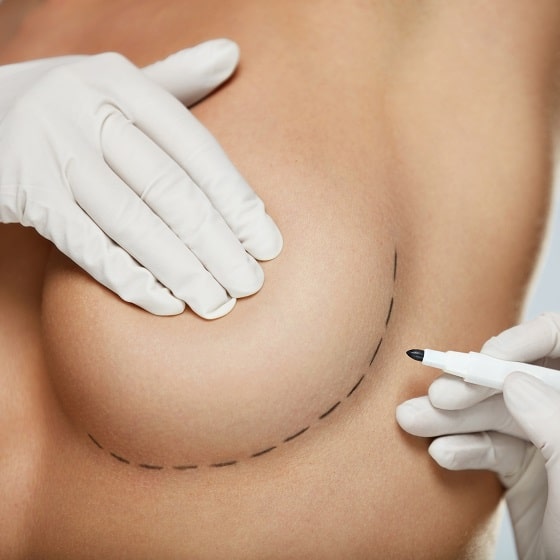
Are you unhappy with naturally small or asymmetrical breasts, or breasts that have lost volume after pregnancy or weight loss? If so, breast augmentation may be your best option. During breast augmentation, implants are placed to increase the size and fullness of your breasts.
Candidates for Breast Augmentation
You may be a suitable candidate for breast augmentation if you are in good physical health and your breasts have stopped developing (i.e., you are over 18 years old). You should not have any chronic medical conditions that could affect or compromise your surgical recovery. It’s important that you have realistic expectations of surgery and understand the potential risks. Some women who are interested in breast augmentation surgery may also consider breast lift surgery. These options will be discussed with you during a surgical consultation with our plastic surgeons.
Preparing for Breast Augmentation
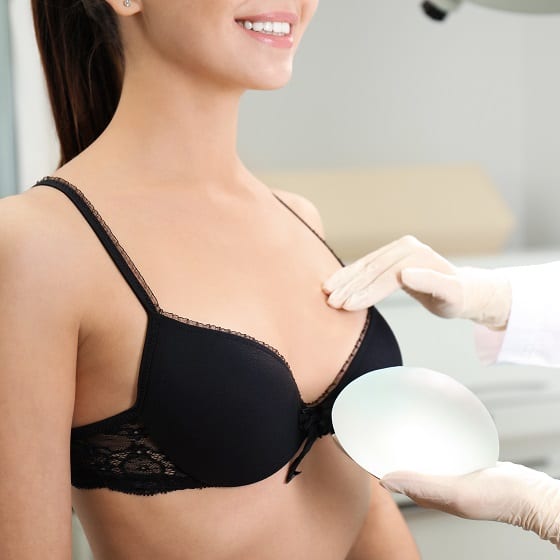
The first step toward breast augmentation is the surgical consultation. Our plastic surgeons will sit down with you to discuss your goals for surgery, your medical history and your lifestyle. They will also explain all aspects of the procedure, including risks, cost and recovery, so that you can make informed decisions about your care. Together, you and our surgeons will discuss the:
- Type of implant — Saline implants are composed of a saltwater solution that the body naturally absorbs in the event of a leak. Usually the saline implant shell is inserted into the body and then filled. Silicone implants are composed of a gel material that feels like and moves similarly to natural breast tissue. Since they are pre-filled, silicone implants require a larger incision than their saline counterparts. Our surgeons will help you decide what type of implant to use based on the look and feel that you want to achieve, your body type and several other factors.
- Incision placement — Incisions are placed in inconspicuous areas to minimize visible scarring. Options include on the areola, in the breast crease and through the armpit.
- Implant placement — Implants may be placed either above or beneath the chest muscle. The placement decision is based on the type of implant being used and your body type.
- Anesthesia options
Prior to surgery you will be asked to undergo several lab tests (potentially a mammogram), stop smoking and avoid certain medications — aspirin, anti-inflammatory drugs, some herbal supplements — in the weeks leading up to your surgery.
The Day of Surgery
Breast augmentation surgeries are performed at Northwestern Memorial Hospital and Prentice Women’s Hospital, with outpatient facilities available. An anesthesiologist will administer medications to help you remain comfortable during the surgery.
Our plastic surgeon will begin by making an incision in the pre-determined location. Through the incision, he will create a small pocket in which to place the implant. He will carefully position the implant in the pocket, and close the incision with sutures.
You will stay in our recovery suite for a couple of hours after surgery, and then be released into the care of a companion, who should escort you home to recover.
Recovering from Breast Augmentation
Your breasts will be sore and swollen for several weeks following your surgery, but this will ease over time. Our plastic surgeon will provide specific instructions for taking care of your incisions and breasts as they heal. We will schedule several follow-up appointments to check the progress of your healing, and clear you to return to exercise and your normal routine within a few weeks of your surgery.
If you experience any shortness of breath, chest pains, irregular heartbeats or other issues that concern you, please seek medical attention immediately. This is not common but should be immediately reported to a medical professional.
Potential Risks of Breast Augmentation
When performed by an experienced plastic surgeon, breast augmentation is a safe procedure. However, every surgery carries a degree of risk. There are no guarantees with breast augmentation. Potential risks include:
- Hematoma (blood pooling beneath the skin)
- Infection
- Fluid accumulation
- Temporary or permanent decrease in nipple / breast sensation
- Anesthesia-related complications
- Blood clots
- Poor wound healing
- Implant leakage or rupture
- Need for revision surgery
Other Considerations
It’s important to note that breast augmentation will not correct breasts that sag or droop. The placement of implants does not elevate the position of saggy breasts. If you are unhappy with saggy breasts, you may want to consider combining breast lift (mastopexy) with the placement of implants.
While the results of breast augmentation are long-lasting, breast implants are not lifetime devices. They are vulnerable to the effects of gravity and aging, just as natural breasts are. At some point you will need to have implants replaced or removed. Our plastic surgeons will discuss this in greater detail and answer any questions you have.
Frequently Asked Questions
It’s very common for Chicago breast augmentation patients to have questions about their procedure and what it entails. Read answers to the questions we hear most frequently below.
How much does breast augmentation cost?
Breast augmentation cost varies by patient, depending on factors such as the type of implant being used and whether the procedure involves breast lift. Because it is considered an elective surgery, insurance typically does not cover the cost of breast augmentation.
Your breast augmentation cost will typically include the surgeon’s fees, facility fees and anesthesia. It may not include pre-operative medical testing (e.g., a mammogram), prescription medications, surgical garments and other miscellaneous costs).
We would be happy to discuss breast augmentation pricing in more detail with you during a one-on-one surgical consultation. Please call us to schedule an appointment.
What size implants should I get?
The size that you choose should be specific to your body type and your desired result. You want to get implants that are large enough to noticeably enhance your bust line, but not so big that they look unnatural on your figure. Our plastic surgeons can help by giving you implant “sizers” that you can slip into your bra to preview how different size implants will look on your body.
Keep in mind that many women who end up having revision breast surgery do so because they want larger implants.
Is the procedure painful?
Medications will be administered for your comfort during surgery, so you won’t feel anything. You may have some post-operative discomfort, although it can be alleviated with oral pain medication.
How long will my implants last?
Implants are designed to be long-lasting. However, if they leak or rupture, or you develop a complication (e.g., capsular contracture), your implants need to be replaced. Also, your implants are not immune to the effects of gravity, pregnancy, nursing and weight fluctuation. These factors may cause your breast tissue and skin to stretch and sag, and your implants may eventually start to look droopy. At that point, you will want to follow up with our surgeons to discuss your options.
Can I breastfeed with implants?
Having breast implants doesn’t necessarily preclude you from breastfeeding; some women are able to successfully nurse with implants. However, implants or not, some women are not able to breastfeed, so there are other factors to consider.
Will my breast implants interfere with mammograms?
Implants may interfere with normal mammogram images, so it’s important to find a facility with a radiologist who has special expertise in reading mammograms of women with breast implants. If you would like assistance finding such a facility, please let us know.
How can I get more information?
For more information about breast augmentation, please contact the Chicago breast surgeons at Northwestern Plastic Surgery. Please call or send us an email.
Learn More about Breast Augmentation
To learn more about breast augmentation with saline or silicone implants, please contact the team at Northwestern Plastic Surgery. Our surgeons are renowned for their expertise in breast procedures such as breast lift, breast reduction, and breast reconstruction in Chicago.
Schedule a Breast Augmentation Consultation
To learn more about breast augmentation surgery, please contact the team at Northwestern Plastic Surgery to schedule a personal consultation. Call us today or send us an email.